
Egress Window Installation Cost in Vancouver, WA: Basement Code, Window Wells & 2026 Pricing
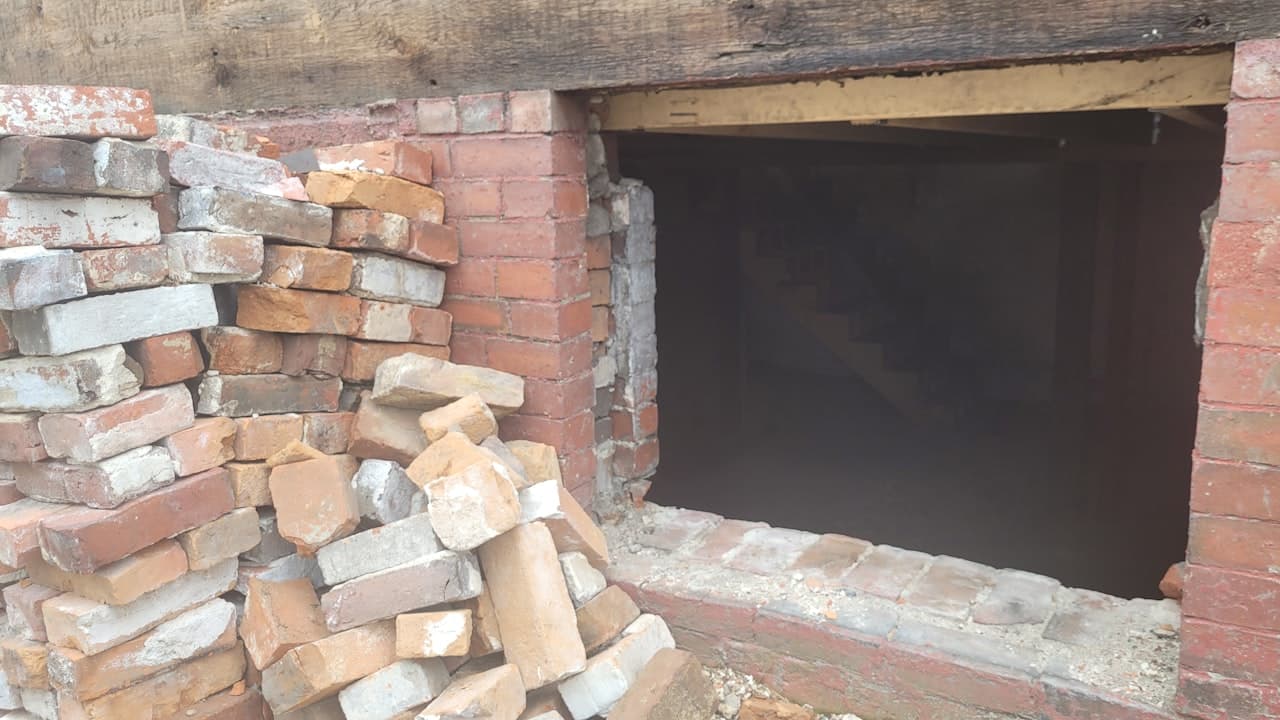
Egress window installation in Vancouver, WA runs $3,800–$8,500 installed in 2026, including the foundation cut, window unit, a code-compliant window well, PNW-grade drainage, and Clark County permits. For most finished-basement bedroom projects in Vancouver and Clark County, you can plan on $4,500–$6,800 all-in — the higher end if you're cutting a 10-inch poured concrete wall on a 1990s tract home in Cascade Park or Hazel Dell.
Why this matters in the Pacific Northwest: Vancouver sits in seismic zone D2 with about 42 inches of annual rainfall, most of it falling between October and April. That changes two things compared to a national egress install — the structural cut almost always needs a Washington-state engineered header letter, and the window well needs a real drain, not just gravel. Skip either and Clark County inspectors will redline the project. This guide breaks down 2026 installed cost, IRC R310 sizing, City of Vancouver and Clark County permit rules, the foundation types we see most in Clark County, and the PNW drainage details that separate a dry basement from a soggy one. If you're planning a full basement finish, the egress window is almost always the first line item in the budget.
Adding a legal basement bedroom or finishing a Clark County basement? Get a line-item egress estimate (foundation cut + well + drainage + permit) from GVX Remodeling.
Request a Free EstimateKey Takeaways
- Installed cost: $3,800–$8,500 for a basement egress window in Vancouver, WA. Most Clark County projects land at $4,500–$6,800 including the well, drainage, and permit.
- Code-required size: 5.7 sq ft net clear opening, minimum 20 in wide, 24 in tall, sill max 44 in above floor (WAC adopted IRC R310).
- Foundation cut: Poured concrete foundations (most Clark County homes built after 1980) cut more predictably than cinder-block. Plan for an engineer letter on any load-bearing cut in Washington's seismic D2 zone.
- PNW drainage: A 4-inch PVC well drain tied into the foundation perimeter drain is non-negotiable in Vancouver. Gravel-only wells flood within their first wet winter.
- Permits: Both City of Vancouver and Clark County require a building permit; expect $250–$650 in fees plus a $400–$900 structural engineer letter.
How much does an egress window cost in Vancouver, WA?
Cost depends on four variables: foundation type, well size, drainage tie-in, and whether the project happens during a larger basement finish or as a one-off retrofit. Standalone retrofits cost more per project because the excavator, concrete cutter, and waterproofing crew each show up for a single window instead of being amortized across a full basement build.
| Scope | Installed cost (Vancouver, WA 2026) | Best fit |
|---|---|---|
| Code-minimum egress, existing window enlargement | $3,800–$5,200 | Smaller opening already roughed in |
| New cut, poured concrete foundation | $4,500–$6,800 | Standard Clark County retrofit |
| New cut, cinder-block foundation | $5,500–$8,500 | Older central Vancouver homes |
| Oversize / double well (entertainment basement) | $7,500–$11,500 | Luxury basement finish |
| Egress + bedroom build-out package | $11,000–$22,000 | Adding a legal basement bedroom |
HomeGuide's 2026 cost data pegs the U.S. national average for egress window installation at roughly $4,229, with most homeowners spending $2,723–$5,877 per window (HomeGuide, 2026). Vancouver pricing tracks the upper half of that range because PNW labor rates run 8–14% above the U.S. median and engineered header letters are effectively mandatory in Washington's seismic D2 zone.
Egress Window Installed Cost by Scope — Vancouver, WA (2026)
What's included in a typical Vancouver, WA quote
- Saw-cut and removal of foundation concrete or block (typically 2–4 hours of cutting plus haul-off)
- Engineered header / lintel above the new opening (steel angle or precast on most poured-concrete jobs)
- The egress window unit itself (casement preferred — typically Milgard, Andersen, or Anlin)
- Exterior excavation 36–42 inches out from the foundation, typically 1–2 cubic yards
- Galvanized, composite, or polymer window well rated for the soil load
- 4-inch PVC drain tied into the perimeter foundation drain plus 12–18 inches of clean drainage gravel
- Waterproofing membrane and flashing where the new opening meets the foundation
- Permit and structural engineer letter (almost always required in Clark County)
What raises a Vancouver egress quote
- Older cinder-block foundation — common in central Vancouver homes built between 1945 and 1975. These blocks crack easier when cut and almost always require a poured-concrete bond beam above the opening.
- Deep well — if the basement floor is more than 8 feet below grade, the well typically needs a permanent ladder per IRC R310.2.3 plus deeper excavation, adding $400–$900.
- Hardscape or landscape removal — a new well that lands inside an existing concrete patio, paver walk, or mature landscape adds $500–$2,500.
- Drainage tie-in challenges — if the home has no functioning perimeter foundation drain (common pre-1990 in Hazel Dell, Minnehaha, and the Fourth Plain corridor), expect a sump pump add ($1,800–$3,200) or a daylight drain run to the curb if grading allows.
- Asbestos or lead paint — pre-1990 homes may need testing on existing finishes adjacent to the cut. See our pre-1990 hidden remodel costs guide for the full Clark County checklist.
IRC R310 & Washington state code basics
Washington state adopts the International Residential Code (IRC) with state amendments via the Washington State Building Code Council. The current adopted code in Clark County is the 2021 IRC, enforced through Chapter 51-51 WAC. IRC Section R310 covers emergency escape and rescue openings, and it's the single section every Vancouver basement finish has to clear.
The five R310 dimensions you have to hit
- Net clear opening: 5.7 square feet minimum (5.0 sq ft is allowed at grade-floor only, not basements)
- Minimum opening height: 24 inches
- Minimum opening width: 20 inches
- Maximum sill height: 44 inches above finished floor
- Operable from inside without keys, tools, or special knowledge
The single biggest misconception we see in Vancouver: homeowners assume any window 20x24 inches passes. It doesn't. A 20-inch by 24-inch opening is only 3.33 square feet — well under the 5.7 sq ft requirement. Hitting 5.7 sq ft with the minimum 20-inch width forces a 41-inch tall opening. That's why casement windows dominate the Vancouver egress market: a single-sash casement opens 90 degrees flush against the frame, so the net clear opening tracks much closer to the rough opening than on a slider or single-hung (Washington Association of Building Officials, R310 egress window code issue).
Net Clear Opening vs Rough Opening by Window Style (5.7 sq ft required)
The chart explains why local Clark County remodelers default to casement units on basement egress jobs. A 20x42-inch casement with a multipoint crank hits 5.83 sq ft of net clear opening — just past code with a reasonably sized rough opening. A slider that looks the same size from the outside delivers half that, because only one sash actually moves out of the opening.
Clark County foundation types & cost impact
The kind of foundation under your house drives the biggest single line item on an egress quote. Three types dominate Clark County housing stock, and each cuts — literally — differently.
Poured concrete (1980–present)
Most Vancouver homes built in Felida, Salmon Creek, Cascade Park, and the Discovery Ridge / north county subdivisions sit on 8–10 inch poured concrete walls. These cut cleanly with a wet diamond saw. Expect a single cutter to finish the opening in a half-day. Plan for $4,500–$6,800 installed for a code-minimum egress with well and drainage.
Cinder-block / CMU (1945–1980)
Older central Vancouver, Minnehaha, Rose Village, and Carter Park homes commonly have 8-inch cinder block foundations. Block doesn't cut like poured concrete — the hollow cores can collapse if the cutter doesn't shore the wall first. Almost every block cut in Clark County gets a poured concrete bond beam above the opening, plus rebar pinning into the existing block. Plan for $5,500–$8,500 installed.
Stem wall on crawl space (any era)
Many ranches in Vancouver Heights, Lewisville, and parts of Hazel Dell sit on short stem walls over a crawl space, not a full basement. Adding an egress here means you don't have a basement to make legal — but the same cutting and waterproofing rules apply if you're converting a crawl to a partial basement during a remodel. These projects are uncommon and usually bundled into a larger addition. See our crawl space encapsulation guide if your moisture goal is sealing the existing crawl rather than converting it.
Pro tip from the field
If your home was built between 1958 and 1978 in central Vancouver, ask the contractor to inspect the foundation for an existing cold joint or wall-to-footing seam before quoting. Cutting near an existing cold joint adds 4–6 inches of structural reinforcement to the engineer's spec, which is the #1 source of change orders on Clark County egress retrofits.
Window wells & PNW drainage details
The well is where most botched egress jobs in Vancouver fall apart. Code minimum is 9 square feet of horizontal area, 36 inches projected from the foundation, and a permanently attached ladder if the well is more than 44 inches deep. That's the easy part. The hard part is keeping 42 inches of annual rainfall out of it.
Window well material options
| Well material | Cost (installed) | PNW pros / cons |
|---|---|---|
| Galvanized corrugated steel | $300–$650 | Cheap, but corrodes in PNW soil within 12–18 years |
| Polymer / composite (Rockwell, Boman Kemp) | $500–$1,100 | 30-year warranty, won't corrode, looks like rock |
| Concrete poured-in-place | $1,400–$2,400 | Permanent, supports landscape load, slowest install |
| Treated lumber timber | $350–$800 | Not recommended in PNW — rots faster than steel corrodes |
The PNW drainage stack that actually works
Vancouver gets the bulk of its 42-inch annual rainfall as long, soaking rain events between November and March, exactly when the soil around the foundation is already saturated. The fix is a multi-layer drainage stack at the well base, not just a thin layer of gravel.
- Geotextile fabric wrapped against the cut soil to keep silt out of the drain
- 4-inch perforated PVC pipe at the bottom of the well, sloped at 1/4 inch per foot toward the perimeter foundation drain
- 12–18 inches of clean drainage rock (3/4-inch washed) above the pipe, no fines
- Daylight or sump connection — the pipe must terminate somewhere water can leave. Daylight to grade if the lot slopes; sump pump if it doesn't
- Clear polycarbonate well cover($150–$350) to keep PNW pine needles, rain, and leaves out without blocking egress
Clark Public Utilities and the City of Vancouver don't rebate egress drainage work, but several local plumbing inspectors confirm that the perimeter foundation drain tie-in is the most-failed item at final inspection — homeowners are stunned by how often well drainage punts a project past Christmas because the inspector sees no daylight termination on the day of the rough.
Quick PNW reality check
A 36x36-inch window well in Vancouver collects roughly 32 gallons of rainwater during a single 1-inch storm. The National Weather Service Portland office logs 8–12 of those events every winter. Without a drain, that's 320+ gallons hitting the bottom of your well between November and March. Gravity has to take it somewhere — ideally not your finished basement floor.
Permits, plan review & inspections
Both the City of Vancouver (inside city limits) and Clark County (unincorporated areas, Hazel Dell, Salmon Creek, Brush Prairie) require a building permit for any new foundation cut. The permits are similar but submitted through different portals.
City of Vancouver permit path
- Submit through Vancouver ePlans (cityofvancouver.us)
- Permit fee: $185–$420 for a basement window cut
- Plan review: 10–15 business days typical
- Required: floor plan, foundation cut detail, engineer letter, window cut sheet, well spec
- Inspections: rough (after cut, before well backfill) and final
Clark County permit path
- Submit through Clark County Community Development (clark.wa.gov)
- Permit fee: $245–$640 depending on valuation
- Plan review: 12–20 business days typical
- Required: structural engineer letter (almost always), site plan if well changes the lot drainage
- Inspections: foundation rough, drainage rough, and final
Pulling a permit on your own home is legal in Washington under the owner-builder exemption. If you're hiring out the work, the contractor must be licensed and bonded with L&I. Always verify a contractor's Washington L&I license before signing — egress work is exactly the kind of structural job where unlicensed shortcuts come back to haunt the appraisal during resale.
Best egress window types for Pacific Northwest homes
Three window styles dominate Vancouver egress installs. The choice usually comes down to opening efficiency, frame durability in damp PNW conditions, and brand availability.
Casement (best overall for basement egress)
A single hinged sash that swings open 90 degrees. The best opening-area-to-rough-opening ratio of any window style, which is why almost every Vancouver basement egress retrofit lands here. Milgard Tuscany, Andersen 100 Series, and Anlin Catalina all make code-compliant egress casements in the 5.7–6.2 sq ft net clear opening range. See our full Milgard vs Andersen vs Anlin comparison for Vancouver for the brand tradeoffs.
Slider (less common, narrower fit)
Two-sash horizontal slider where only one panel moves. Net clear opening is roughly half the rough opening, so the wall cut has to be much wider to clear 5.7 sq ft. Used occasionally where ceiling height limits the vertical opening or the rough opening already exists at a wider but shorter dimension.
In-swing hopper egress (rare but useful)
Hinged at the bottom, swings into the basement. Used almost exclusively in conversions where the well outside is constrained by an existing patio or driveway and the homeowner doesn't want to demo concrete. Modern hopper-egress units from Bilco and Boman Kemp clear 5.7 sq ft with a smaller exterior footprint. Costs $400–$900 more than a comparable casement.
Installation timeline week by week
Plan on three to five weeks from contract signature to passed final inspection in Vancouver. Most of that time is the permit, not the field work.
| Week | Activity |
|---|---|
| Week 1 | Site measurement, engineer letter, permit submittal through Vancouver ePlans or Clark County portal |
| Week 2–3 | Plan review and permit issuance (10–20 business days) |
| Week 3 (day 1) | Exterior excavation, shoring (if cinder block), utility locates |
| Week 3 (day 2–3) | Foundation saw-cut, header install, waterproofing membrane, window installation |
| Week 3 (day 4) | Window well install, drain tie-in, drainage rock, gravel cap |
| Week 4 | Rough inspection (drainage visible), interior trim, backfill, landscape restoration |
| Week 4–5 | Final inspection, sign-off, well cover install |
When is a Vancouver basement bedroom "legal"?
This is the single most-asked question on egress projects in Clark County. The Washington state answer is that a basement bedroom is legal only when it meets all four of these conditions at the time of inspection:
- A code-compliant emergency egress opening (the egress window itself, IRC R310)
- Minimum ceiling height of 7 feet over at least 50% of the floor area (IRC R305)
- Permitted with proper plan review and final inspection — not just remodeled "under the radar"
- Heat source, either an HVAC supply register, baseboard heater, or wall furnace capable of maintaining 68°F at 3 feet above the floor
Missing any of those four turns a "basement bedroom" into a "non-conforming space" on a Clark County appraisal. The appraiser will refuse to count it as a bedroom on the closing report, even if the home is marketed that way. Local Vancouver agents report a typical $18,000–$35,000 appraisal hit on homes marketed as 4-bedroom that close as 3-bedroom because the basement room was never permitted (City of Vancouver, residential permits guidance).
Real-world Vancouver example
A 1972 ranch in Hazel Dell listed as a 4-bedroom went pending in early 2026 at $565,000. The appraisal flagged the basement bedroom as non-conforming (no egress, no permit, ceiling at 6'9"). Final sale closed at $529,000 as a 3-bedroom — a $36,000 swing on a project that would have cost $5,400 to do right at finish time. Egress is one of the highest-ROI line items in any Clark County basement build.
Cost vs Appraisal Lift — Permitted Basement Bedroom (Vancouver, WA 2026)
Common mistakes Clark County homeowners make
- Calculating opening size from outside dimensions. Net clear opening is what code measures, not the window frame. A "48x36-inch egress window" from a big-box spec sheet doesn't automatically pass.
- Skipping the engineer letter. Washington's seismic D2 designation means Clark County plan review will bounce the application without one. The $400–$900 letter is non-negotiable.
- Backfilling before the rough inspection. Drainage tie-in has to be visible. Backfill early and the inspector will require you to dig it back up.
- Trusting gravel as drainage. A foot of rock with no pipe and no outlet is a 9 sq ft cistern, not a drain. Every well needs a destination.
- Calling a basement room a bedroom without permitting it. The room can exist; it just can't be marketed or appraised as a bedroom without egress, height, heat, and a permit on file.
- Cutting a window well into the path of a downspout discharge. Common in older Vancouver homes where downspouts dump at grade. Reroute the downspout before excavation or you'll be pumping the well by Thanksgiving.
Planning a Vancouver basement finish?
GVX Remodeling handles the full stack — engineer letter, permit, foundation cut, well, drainage, inspection — on Clark County basement egress projects. Most jobs close out in 3–5 weeks.
Get a Free Egress EstimateFrequently asked questions
How much does it cost to install an egress window in Vancouver, WA?
Egress window installation in Vancouver, WA costs $3,800 to $8,500 fully installed in 2026, including foundation cutting, the window unit, a code-compliant window well, gravel drainage, and Clark County permits. Pricing varies by foundation type — poured concrete (most common in post-1980 Clark County homes) runs $4,200–$6,800, while older cinder-block foundations on the west side of Vancouver typically run $5,500–$8,500 because of the more complex cutting and reinforcement work. Adding a second well or a window over 32x48 inches can push the project to $9,000+.
Is an egress window required for a basement bedroom in Clark County, WA?
Yes. Washington state adopts the International Residential Code (IRC) Section R310, which requires every sleeping room — including basement bedrooms — to have at least one operable emergency escape and rescue opening. Clark County and the City of Vancouver enforce this through plan review and rough-in inspections. Selling a home that advertises a basement bedroom without a legal egress is a known appraisal and inspection flag in Clark County, and many local lenders will not count the room as a bedroom on the appraisal.
What size does an egress window need to be in Washington state?
Washington state R310 requires a net clear opening of at least 5.7 square feet (5.0 sq ft is allowed at ground-floor grade level only). Minimum opening width is 20 inches, minimum opening height is 24 inches, and the sill cannot be more than 44 inches above the finished floor. The window must open from the inside without keys, tools, or special knowledge. Casement windows are the most common code-compliant choice in Vancouver because they hit the 5.7 sq ft opening at a smaller rough opening than sliders or single-hungs.
Do I need a permit to install an egress window in Vancouver, WA?
Yes — both the City of Vancouver and Clark County require a building permit for cutting a new opening in a foundation wall. The permit is submitted electronically through the City of Vancouver ePlans portal or Clark County's Community Development permit system. Expect $250–$650 in permit and plan-review fees, plus a structural engineer's letter ($400–$900) if you're cutting through a load-bearing concrete wall. Engineer letters are required almost universally in Vancouver because of the seismic zone (D2) classification for Clark County.
How do you keep a basement egress window from flooding in the Pacific Northwest?
PNW rainfall — Vancouver averages about 42 inches per year, mostly between October and April — makes egress window well drainage the single most important detail of the install. The fix is a properly tied-in drain: a 4-inch PVC drain line in the bottom of the well connected to the home's perimeter foundation drain or daylighted to grade, with 12–18 inches of clean drainage gravel and a fabric-wrapped drain pipe. Adding a clear acrylic well cover is also a smart, low-cost upgrade (usually $150–$350) that keeps rain, leaves, and pine needles out of the well without blocking emergency egress.
Can I install an egress window myself in Clark County, WA?
Legally, an owner-occupant can pull their own permit and self-install in Washington under the owner-builder exemption. Practically, almost no one should. The job requires concrete saw-cutting (often through a 10-inch poured wall), structural reinforcement above the new opening, waterproofing the foundation cut, exterior excavation, drainage tie-in, and an engineered window well — all to pass a Clark County structural and final inspection. The wrong cut weakens the foundation, and a missed drain detail turns a finished basement into a wet one within a single PNW winter.
Sources & references
- City of Vancouver, WA — Residential Building Permits
- Clark County Community Development — Building Permits
- Washington Association of Building Officials (WABO) — R310 Egress Window Code Issue
- HomeGuide — Egress Window Installation Cost (2026)
- Angi — How Much Does an Egress Window Cost (2026 Data)
- Washington State Building Code Council — WAC Chapter 51-51 (IRC adoption)
- National Weather Service Portland — Climate Data
Written by
GVX Remodeling Team
Vancouver, WA general contractor with 28 years of residential remodeling experience across Clark County (since 1998). We design and build legal basement bedrooms, egress windows, and whole-home renovations across the Pacific Northwest.