Hidden Costs of Remodeling a Pre-1990 Home in Vancouver, WA: Asbestos, Lead Paint & Knob-and-Tube (2026 Guide)
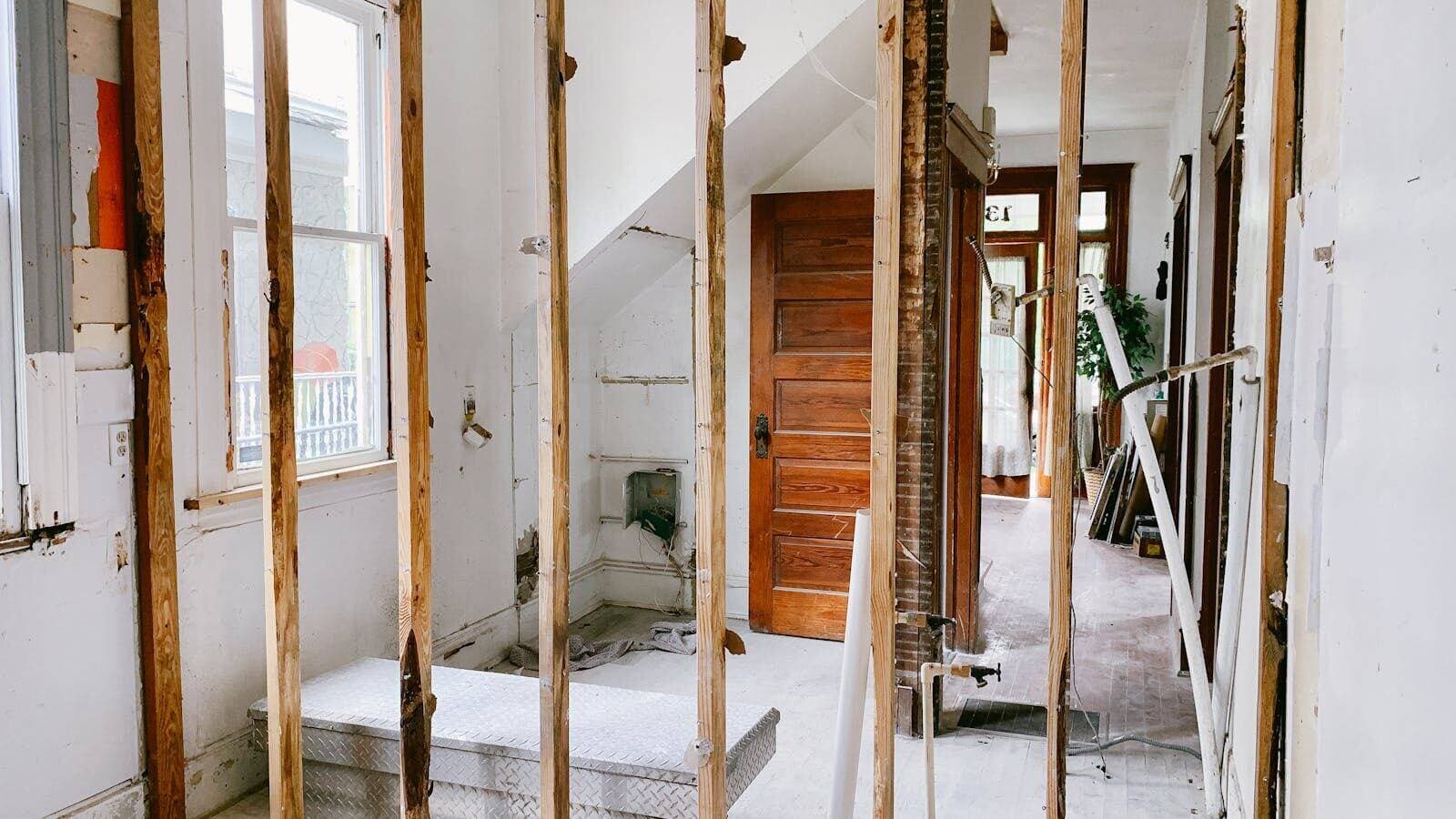
An older home remodel in Vancouver, WA typically carries $3,000 to $25,000+ in hidden costs that do not appear in a standard remodeling quote — asbestos testing and abatement, lead paint containment under EPA RRP rules, knob-and-tube rewiring, galvanized pipe replacement, panel upgrades, and code-triggered work exposed during demolition. On a pre-1990 Clark County home, plan a 15 to 20 percent contingency on top of the headline remodel budget instead of the 10 percent typical for newer builds.
Clark County has one of the older housing stocks in Southwest Washington. Roughly 55 percent of the homes in the City of Vancouver and older areas of Hazel Dell, Orchards, and Salmon Creek were built before 1990, and a meaningful share were built before 1978, when the federal residential lead paint ban took effect. Per the U.S. Census Bureau American Community Survey, the median Clark County home was built in the late 1980s, and tens of thousands of bungalows, ranchers, and split-levels in Hough, Carter Park, Rose Village, and Shumway predate 1970. Owning one comes with a question every remodel eventually triggers: what is behind the drywall, under the flooring, and in the attic, and what does it cost to deal with it legally?
This guide answers that question with Vancouver-specific testing and abatement pricing, Washington L&I and EPA RRP rules that drive the numbers, and a realistic hidden- cost checklist to run before you sign a remodel contract in 2026.
TL;DR
Hidden costs when remodeling a pre-1990 home in Vancouver, WA (2026): asbestos survey $350–$850, asbestos abatement $1,500–$12,000+, lead paint test $400–$900, lead-safe RRP labor premium 15–25%, knob-and-tube rewiring $8,000–$20,000, galvanized repipe $4,000–$15,000, panel upgrade $1,800–$5,500, plaster and framing surprises $2,000–$10,000. Pre-1981 homes are presumed to contain asbestos under Washington law. Pre-1978 homes are presumed to contain lead paint under EPA RRP. Always test before you demo, and carry a 15–20% contingency.
Planning a Remodel on an Older Home?
Our team has remodeled pre-1990 homes across Hough, Carter Park, Hazel Dell, and Orchards — including full asbestos, lead, and knob-and-tube workflows with licensed abatement partners. Free estimates with a written hidden-cost checklist for your property.
Request a Free EstimateHidden Remodel Cost Overview for Pre-1990 Homes (2026)
A pre-1990 home renovation in Vancouver, WA stacks three cost layers on top of the visible remodel scope. Hazardous material work is required by state and federal law before demolition. System upgrades are triggered once walls are open and inspectors see original wiring and piping. Structural surprises show up when plaster, sheathing, and subfloor come off and reveal what is behind them.
The combined hidden-cost envelope varies widely by home age, scope of demo, and whether hazmat material is friable (crumbling and airborne) or intact. The ranges below reflect typical Clark County pricing in 2026 from licensed abatement and trade contractors.
Typical Hidden Cost Line Items — Pre-1990 Home Remodel, Vancouver, WA (2026)
Sources: Washington L&I asbestos contractor rates, EPA RRP guidance, SWCAA fee schedule, and local Clark County trade contractor quotes.
A common mistake is to treat these as a contingency. They are not. On pre-1981 and pre-1978 homes respectively, asbestos and lead work are a legal prerequisite to demolition, not an optional buffer. A Washington L&I inspector or a Clark County building official can stop a job the moment they see drywall in a dumpster without documentation that hazmat screening was completed.
For a broader view of remodel pricing without the older- home layer, see our Vancouver whole-house remodel cost guide. This post focuses on everything the headline number leaves out.
Asbestos: Testing, Abatement, and Washington Rules
Any home built before 1981 in Washington is presumed to contain asbestos until a licensed survey says otherwise. Commercially available asbestos was still allowed in residential construction products into the early 1980s, and legacy pipe insulation, ductwork, and textured surfaces from the 1960s and 1970s remain extremely common in Clark County homes. Washington regulates asbestos work under WAC 296-62-07712, and the Southwest Clean Air Agency (SWCAA) enforces notification and disposal rules across Clark, Cowlitz, Lewis, Skamania, and Wahkiakum counties.
Where asbestos usually shows up in a pre-1990 Vancouver home
- Popcorn and textured ceilings installed roughly 1950 to 1980
- 9x9 and 12x12 vinyl floor tile and the black mastic adhesive beneath
- Sheet vinyl flooring with a paper backing
- Pipe and duct wrap insulation, especially white chalky material on old steam or hot-water lines
- Vermiculite attic insulation(often sold as Zonolite) commonly contaminated with Libby amphibole asbestos
- Cement-asbestos siding and Transite panels on mid-century ranchers
- Joint compound and textured wall plaster
- Roofing felt and shingle mastic
Testing cost in Vancouver, WA (2026)
A standard residential asbestos survey by a Washington AHERA-certified inspector costs $350 to $850in 2026 and includes 5 to 10 bulk samples sent to an accredited lab. Additional samples run roughly $40 to $75 each. If abatement is needed, the inspector can issue a pre-work inspection report that satisfies SWCAA and L&I documentation, and the same firm typically performs the final clearance air test after abatement ($300 to $600) to certify the space is safe for re- occupancy.
Abatement cost ranges for common Clark County scopes
Only Washington L&I certified asbestos abatement contractors can legally remove friable or damaged asbestos-containing material. Typical 2026 Vancouver pricing:
- Popcorn ceiling removal: $8 to $22 per square foot with containment and HEPA cleanup; a 400-square-foot living room ceiling runs roughly $3,200 to $8,800
- 9x9 vinyl floor tile and mastic:$2,000 to $5,000 for a kitchen or laundry room
- Pipe and duct insulation: $10 to $25 per linear foot
- Vermiculite attic removal: $6,000 to $12,000+ for a full attic, depending on access and square footage
- Cement-asbestos siding removal: $6 to $14 per square foot, plus dump fees at a permitted Washington facility
Before any project disturbs more than 260 linear feet or 160 square feet of asbestos-containing material, the abatement contractor must file a notification with SWCAA at least 10 working days before work begins. SWCAA notification fees run $100 for small residential jobs up to $1,100 for larger scopes, per the Southwest Clean Air Agency fee schedule. Skipping this step is the single most expensive mistake a homeowner or unlicensed contractor can make on an older Clark County remodel — SWCAA can issue fines of $1,000 to $10,000+ per violation, and the job stops until the notification is filed and the waiting period runs.
Pro Tip
Schedule the asbestos survey at the same time as your home inspection or contractor walk-through, not after the contract is signed. A $500 survey that finds popcorn ceilings and vermiculite insulation can move your remodel budget by $10,000 or more, and it is better to know that number before you commit to a scope of work. Most Vancouver-area remodelers, including GVX, can coordinate the survey as part of pre-construction and build the results directly into the project schedule and contract.
Lead Paint and EPA RRP in a 2026 Remodel
The federal ban on residential lead-based paint took effect in 1978. Every home built before that year is presumed to contain lead paint somewhere unless a certified test says otherwise, and Vancouver has thousands of pre-1978 homes in Hough, Rose Village, Carter Park, Esther Short, Shumway, Arnada, and the older streets of Hazel Dell and Fruit Valley.
The EPA Renovation, Repair, and Painting (RRP) Rule governs any remodel activity that disturbs more than 6 square feet of interior or 20 square feet of exterior painted surface in a pre-1978 home. That threshold is easy to hit — a typical kitchen or bathroom gut blows past it in the first hour of demo. In Washington, the state operates an authorized RRP program through the Department of Commerce, so every firm doing this work must carry a current Washington State RRP firm certification, and every on-site supervisor must be a certified renovator.
What RRP actually requires
- Pre-renovation lead testing or assumption of lead-containing paint
- Notification of all adult occupants, with the EPA Renovate Right pamphlet delivered before work starts
- Plastic containment barriers sealing the work area from the rest of the home
- Wet methods only during surface prep — no dry sanding, open-flame burning, or high-temperature heat guns
- HEPA vacuum cleanup and verification wipes
- Three years of recordkeeping, available for EPA or Washington Commerce audit
What it costs on a Vancouver remodel
A pre-work lead paint test by a certified lead risk assessor runs $400 to $900 in 2026 for a typical Clark County home. The test uses an XRF analyzer and targeted paint chip samples; if it comes back negative, RRP does not apply and you can proceed with standard demolition.
When lead is confirmed, expect a 15 to 25 percent labor premium on any demolition, sanding, or surface prep that touches affected material. On a $60,000 kitchen remodel with $18,000 in demo and prep, that is roughly $2,700 to $4,500 in added labor for containment, cleanup, and certified- renovator supervision. Large exterior scrape-and-repaint projects on pre-1978 siding can add $8 to $15 per square foot of affected wall area.
EPA and Washington Commerce enforce RRP aggressively. Civil penalties run up to $37,500 per violation per day, and unpermitted work on pre-1978 homes is one of the top reasons unlicensed contractor operations face enforcement in Washington state. Every contractor you consider for an older Vancouver home should be able to produce a Washington RRP firm certification number on request. For the rest of the vetting checklist, see our guide to how to choose a remodeling contractor in Vancouver, WA.
Knob-and-Tube Wiring Replacement Cost
Knob-and-tube wiring was the standard residential electrical system in the United States from the 1880s into roughly the mid-1940s, with some installations continuing into the late 1950s and early 1960s in rural Clark County. It uses individual insulated conductors running through white ceramic tubes at framing penetrations, supported by ceramic knobs nailed to joists and studs. It has no ground conductor, no sheathing to protect the insulation, and no ability to handle modern electrical load safely once the original rubber or cloth insulation degrades.
Why it matters for a remodel
Several major Washington homeowners insurance carriers either will not write policies on homes with active knob-and-tube, or charge a substantial surcharge for coverage. Buyers increasingly demand documentation that the system has been replaced before they close. And most importantly, Clark County inspectors will flag active knob-and-tube on any permitted remodel once walls are open, which can force a larger rewire than the original remodel scope anticipated.
2026 replacement cost ranges in Vancouver, WA
- Partial rewire (single room or circuit): $1,500 to $4,000
- Major rewire (kitchen and baths during a remodel): $4,500 to $9,000
- Whole-house rewire (typical 1,500 to 2,200 sq ft Clark County home): $8,000 to $20,000
- Whole-house rewire with finished plaster walls that must be patched: $15,000 to $28,000
Rewiring during an open-wall remodel saves 25 to 40 percent compared to a retrofit on a finished home because electricians do not have to fish wires through existing plaster or drill finished studs. If you are already doing a kitchen or bathroom gut on a pre-1950 home, this is the moment to budget for a full rewire rather than a patch.
In nearly every older-home remodel, a knob-and-tube rewire arrives paired with a panel upgrade. Older homes with ceramic fuse panels or 60-amp service cannot support a rewired home plus a modern kitchen, HVAC, and EV charger. Budget $1,800 to $5,500 for a 200-amp panel upgrade. See our detailed electrical panel upgrade cost guide for Vancouver, WA for full pricing and Washington L&I permit requirements.
Galvanized Pipes and Other Plumbing Surprises
Homes built before roughly 1960 in Vancouver, WA typically have galvanized steel water supply pipes rather than modern copper or PEX. Galvanized pipe has a 40 to 60 year service life; interiors corrode, scale reduces water pressure, and by the time a 1940s or 1950s home is being remodeled in 2026, the supply lines are well past end-of-life. Other older-home plumbing issues include cast iron drain lines that crack at joints, lead solder on early copper installations, and polybutylene supply lines from the 1970s and 1980s that fail at fittings.
Whole-house repiping in Vancouver, WA runs $4,000 to $15,000+ in 2026 depending on home size, pipe material, and access. PEX is roughly 30 to 40 percent cheaper than copper for the same scope. For a full cost breakdown by material, home size, and Clark County permit requirements, see our whole-house repiping cost guide for Vancouver, WA.
Like rewiring, repiping is dramatically cheaper when walls are already open. If you are doing a kitchen or master bath remodel on a pre-1960 home, it is almost always worth extending the scope to replace any galvanized or polybutylene supply lines in the same project. Splitting the work into two separate jobs adds drywall, paint, and mobilization costs the second time around.
Older-home systems worth checking before you commit
- Water heater: 10 to 15 year life; swap now if you are opening mechanical-room walls
- Main sewer line: Clay and Orangeburg pipe from pre-1975 homes commonly fails; $100 to $250 camera inspection is cheap insurance
- Hose bibs and exterior faucets: often galvanized even when interior supply has been partially replaced
- Shutoff valves: 50-plus-year-old gate valves often seize open and cannot isolate a fixture for repair
Structural and Moisture Surprises Behind the Walls
Once hazmat is out and systems are upgraded, the next wave of hidden costs comes from what demolition exposes. In a Pacific Northwest climate with 42 inches of annual rain per the National Weather Service Portland-Vancouver station, pre-1990 homes routinely hide moisture damage, undersized framing, and outdated insulation behind finished surfaces.
Common surprises on Clark County remodels
- Rotted sill plates and rim joistswhere siding drains directly onto foundation lines
- Undersized headers over relocated doors or windows that need resizing to current code
- Minimal or zero wall insulation on homes built before the 1976 energy code update
- Failed window flashing that has saturated sheathing and introduced mold behind drywall
- Bathroom subfloor rot from decades of wax-ring and tub-surround leaks
- Previous DIY work that fails current code: missing shear walls, notched load-bearing studs, improperly supported beams, and non-permitted electrical or plumbing runs
Expect $2,000 to $10,000 in repair and code-upgrade work per major room on a pre-1990 Clark County home once demo reveals conditions. This is the category where the 15 to 20 percent contingency earns its keep. Skipping the contingency on an older home almost always leads to a change-order argument with a contractor mid-project and a paused remodel while the homeowner figures out how to fund the overage.
For a deeper read on the materials that hold up best in PNW moisture once the walls are open, see our guide to the best remodeling materials for Vancouver's wet climate.
Get a Pre-Demo Hazmat and Systems Walk-Through
Before you sign a remodel contract on a pre-1990 Clark County home, let us walk the property with you. We coordinate asbestos and lead testing, verify knob-and-tube and panel status, and build a realistic hidden-cost line item into your estimate so you are not guessing.
Schedule a Free Walk-ThroughClark County and SWCAA Notification Rules
Clark County and the City of Vancouver enforce state and federal hazmat rules through the permit and inspection process. A few practical notes for older- home remodels in 2026:
- Permit applications ask about the home's year built. Homes listed as pre-1981 or pre-1978 trigger asbestos and lead disclosures on the permit paperwork.
- SWCAA notification is separate from the building permit. Your abatement contractor files it; your general contractor does not. Ask for the notification confirmation number before demo starts.
- Electrical and plumbing permits are issued by Washington L&I, not the City of Vancouver. Rewires and repipes require separate L&I permits and inspections.
- Code-triggered upgrades are common.Once a bedroom wall is opened, inspectors may require modern egress windows, hardwired smoke and CO detectors on every level, and insulation upgrades to current Washington Energy Code.
- Historic overlay properties in the Vancouver Heritage Overlay District or on the Clark County Heritage Register require a Certificate of Appropriateness for exterior changes, adding 4 to 8 weeks to permitting.
For a step-by-step Vancouver remodel permitting walk- through that covers standard scopes, see our Vancouver, WA remodeling permits and inspections guide.
How to Budget and Sequence an Older-Home Remodel
The sequencing matters as much as the money. Older-home remodels go sideways when homeowners treat hazmat, systems, and structural work as surprises instead of scheduled phases. A workable 2026 sequence for a pre-1990 Vancouver remodel:
- Pre-contract: Asbestos survey and lead paint test. Verify knob-and-tube and panel status with a licensed Washington electrician. Sewer line camera inspection on pre-1975 homes. Budget each line item based on findings, not averages.
- Design phase: Identify which walls are coming down, which systems are being touched, and which rooms are in scope for abatement. A clear demo map drives accurate abatement and rewire pricing.
- Pre-demo: File SWCAA notification (minimum 10 working days). Schedule abatement contractor. Pull electrical, plumbing, and building permits.
- Abatement: Licensed Washington asbestos and RRP work happens before general demo. Final air clearance test is filed with records.
- Demolition and rough-in: Panel upgrade, rewire, repipe, and framing repairs happen with walls open. All inspections pulled in order before insulation and drywall.
- Finish work: Standard remodel sequence from this point. Because pre-remodel hazmat and systems work was done cleanly, finish trades are not slowed by code-triggered change orders.
For a broader remodel-vs-move analysis on older Clark County homes, the remodel or move cost comparison for Vancouver, WA runs the full math. In almost every case, a properly sequenced older-home remodel beats a teardown or a move to a newer home on the same budget.
Sources
- Washington Administrative Code WAC 296-62-07712 — Asbestos
- Washington State Department of Labor & Industries — Asbestos Program
- Southwest Clean Air Agency (SWCAA) — Asbestos Notification and Fees
- EPA — Renovation, Repair, and Painting (RRP) Program
- Washington State Department of Commerce — Lead-Based Paint Program
- EPA — Protect Your Family from Sources of Lead
- City of Vancouver — Residential Building Permits
- U.S. Census Bureau — Clark County, WA Profile (ACS)
- National Weather Service — Vancouver, WA Climate
Frequently Asked Questions
How much does asbestos abatement cost in Vancouver, WA?
Asbestos abatement in Vancouver, WA costs $1,500 to $12,000+ in 2026, depending on the material, square footage, and where it is in the home. Typical Clark County prices run $8 to $22 per square foot for popcorn ceiling removal, $10 to $25 per linear foot for pipe insulation, $2,000 to $5,000 for a small floor tile and mastic area, and $6,000 to $12,000+ for whole-house vermiculite attic insulation removal. Pricing includes containment, HEPA-filtered negative air, licensed abatement labor, double-bagged disposal at a Washington-permitted facility, and a final clearance air test. Only Washington Department of Labor and Industries certified abatement contractors can perform the work, and a notification must be filed with the Southwest Clean Air Agency (SWCAA) at least 10 working days before the project starts.
Do I need asbestos testing before a remodel in Washington?
Yes. Washington law treats any home built before 1981 as presumed to contain asbestos, and WAC 296-62-07712 requires a good-faith survey before renovation or demolition work that could disturb suspect materials. In practice that means a Washington AHERA-certified inspector must collect bulk samples from popcorn ceilings, vinyl flooring, mastics, pipe and duct insulation, plaster, textured walls, siding, joint compound, and roofing before demo. Expect to pay $350 to $850 for a standard residential asbestos survey in Vancouver, WA in 2026, with additional samples at roughly $40 to $75 each. If the report clears the home, you can skip abatement and proceed. If it identifies friable or damaged asbestos-containing material in your work area, abatement must happen before demo, and a SWCAA notification is required.
What hidden costs come with remodeling an older home in Vancouver, WA?
The biggest hidden costs when remodeling a pre-1990 home in Vancouver, WA are hazardous material abatement, system upgrades to modern code, and structural repairs exposed during demo. Plan on $3,000 to $25,000+ in line items that rarely show up in a first-pass contractor quote: asbestos testing ($350 to $850), asbestos abatement ($1,500 to $12,000+), lead paint testing ($400 to $900), lead-safe containment work under EPA RRP rules ($8 to $15 per square foot of affected area), knob-and-tube rewiring ($8,000 to $20,000 whole-house), galvanized pipe replacement ($4,000 to $15,000), electrical panel upgrades ($1,800 to $5,500), failed plaster or rotted framing repair ($2,000 to $10,000), and code-triggered upgrades to insulation, egress windows, or smoke and CO detectors ($500 to $4,000). Most Clark County remodelers recommend a 15 to 20 percent contingency on older-home budgets instead of the 10 percent typical for newer builds.
How do I know if my Vancouver, WA home has knob-and-tube wiring?
Most Vancouver, WA homes built before 1950 originally had knob-and-tube wiring, and some homes into the early 1960s retained partial runs. Look in the attic or basement for individual insulated conductors running through white ceramic tubes at framing penetrations and supported by ceramic knobs on joists. The wiring has no ground, no sheathing, and no outlet grounding pin on original receptacles. Other signs: two-prong outlets throughout, ceramic fuse panels instead of circuit breakers, frequent tripped fuses, and blown-in attic insulation over visible old wiring (a safety and insurance concern). Several major Washington insurers either will not write homeowners policies on active knob-and-tube or charge a significant surcharge, which makes rewiring a resale issue beyond basic safety. Have a Washington L&I licensed electrical contractor inspect any pre-1960 home before closing or before starting a remodel.
What are EPA RRP rules for lead paint in a Vancouver, WA remodel?
Under the EPA Renovation, Repair, and Painting (RRP) Rule, any renovation that disturbs more than 6 square feet of interior or 20 square feet of exterior painted surface in a pre-1978 home must be performed by an EPA RRP certified firm using lead-safe work practices. That means plastic containment barriers, HEPA vacuum cleanup, wet methods (no dry sanding or open-flame burning of painted surfaces), certified renovator supervision, and specific recordkeeping for three years. In Washington, the state runs its own authorized RRP program, and every firm must carry a current Washington State Department of Commerce RRP firm certification. Expect a 15 to 25 percent labor premium for demo and surface prep work when lead-safe practices apply. A pre-work lead paint test ($400 to $900) can confirm whether RRP is triggered; if lead is not detected, the rule does not apply. Penalties for non-compliance run up to $37,500 per violation per day.
Is it worth remodeling a pre-1990 home in Vancouver, WA instead of tearing down?
Remodeling almost always beats teardown for a structurally sound pre-1990 home in Vancouver, WA, even with the hidden-cost surcharge. A full tear-down and new build on a typical Clark County lot runs $650,000 to $1.2 million in 2026 once demolition, permits, and new construction are factored in, and rebuilds lose the mature lot landscaping, established neighborhood character, and any grandfathered setback or lot-coverage allowances. A character-preserving remodel of the same home typically costs $150,000 to $400,000 including abatement and systems upgrades, and recoups 60 to 80 percent at resale depending on neighborhood. The math flips only if the home has severe foundation failure, widespread dry rot, fire damage, or is a non-conforming use the owner wants to convert. For most pre-1990 Clark County homes with intact structure and roof, a staged remodel with a proper pre-demo hazmat workup is the cheaper and higher-ROI path.
GVX Remodeling Team
Vancouver, WA general contractor with 15+ years of residential remodeling experience across Clark County, including full-scope renovations of pre-1990 homes with coordinated asbestos, lead-safe RRP, and knob-and-tube workflows. Licensed, bonded, and insured in Washington state.