Dormer Addition Cost in Vancouver, WA: Shed, Gable & Eyebrow Compared (2026)
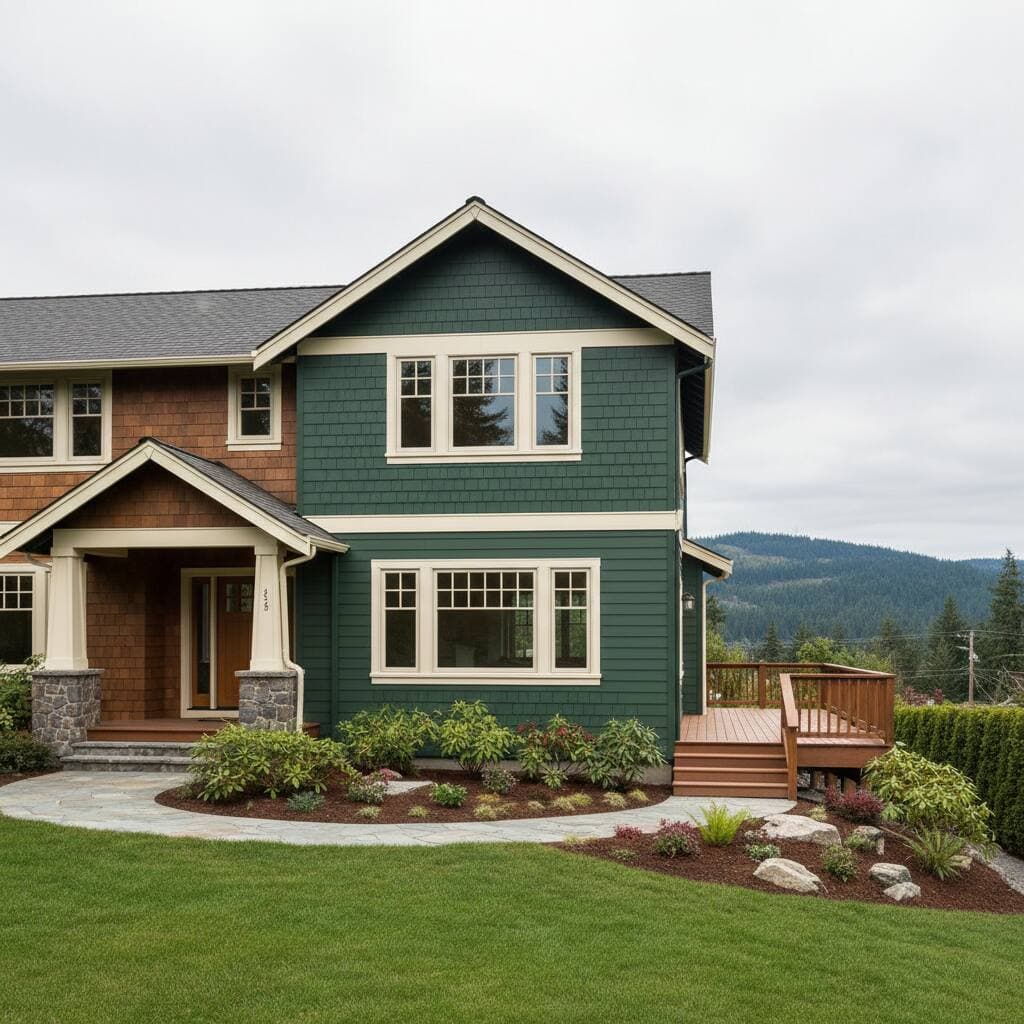
Dormer addition cost in Vancouver, WA runs $4,000–$30,000+ in 2026, depending on the dormer style, size, and how much living space you finish underneath. A small gable dormer that adds a single attic window starts around $4,000. A full shed dormer that converts an unfinished attic into a permitted bedroom and bathroom can run past $30,000 with finishes.
This guide compares the three most common dormer styles — shed, gable, and eyebrow — for Clark County homes. You'll see real 2026 cost ranges, how each style performs in Pacific Northwest weather, what Vancouver permits require, and which dormer type makes the most sense for your goals.
TL;DR
Shed dormers ($18k–$30k+) add the most usable headroom and square footage. Gable dormers ($4k–$15k) add light and architectural character with moderate space gain. Eyebrow dormers ($5k–$12k) are primarily aesthetic. All three require a Clark County building permit and proper PNW flashing details to avoid water intrusion.
Thinking about a dormer addition? Our team provides free, no-obligation estimates for dormers and attic conversions across Clark County.
Get Your Free EstimateDormer Cost Comparison: Shed vs. Gable vs. Eyebrow
The three dormer styles serve different purposes and carry meaningfully different price tags. Shed dormers are workhorses for usable space. Gable dormers are the classic American style that adds light and headroom in a smaller footprint. Eyebrow dormers are decorative, with custom curved framing that drives cost per square foot up sharply.
| Dormer type | Typical cost (2026) | Headroom gained | Best use |
|---|---|---|---|
| Shed dormer | $18,000–$30,000+ | High (long flat ceiling) | Attic conversions, full bedroom or bonus suite under a sloped roof |
| Gable dormer | $4,000–$15,000 | Moderate (peaked, localized) | Adding a window, light, and a small headroom pocket to an attic or upstairs bedroom |
| Eyebrow dormer | $5,000–$12,000 | Minimal | Curb appeal, period-correct details on Craftsman or cottage homes |
These ranges include framing, sheathing, roofing, siding, windows, flashing, insulation, and a basic interior finish. Costs go up if you're building out a new bedroom or bathroom inside the dormer — you'll add electrical, HVAC extension, drywall, and finish work. Pair this guide with our second story addition cost guide if you're weighing a dormer against a full vertical expansion.
Dormer Addition Cost by Type — Vancouver, WA (2026)
Includes framing, roofing, siding, windows, flashing, and basic interior finish
Shed Dormer: Best for Usable Space
A shed dormer has a single sloped roof that runs in the same direction as the main roof, but at a shallower pitch. Functionally, it converts a steeply pitched roof into a flat ceiling line, instantly creating headroom across a long span. Of the three styles, this is the only one that reliably turns unfinished attic space into a real bedroom or bonus room.
Cost: $18,000–$30,000+
A typical Clark County shed dormer spans 12–20 feet along the back of the home and adds 200–400 square feet of usable interior space. At $18,000 you're looking at framing, sheathing, roofing, basic windows, and a dried-in shell. Push to $30,000+ when you finish the interior with drywall, insulation, flooring, electrical, HVAC extension, and a small bathroom.
Best for
- Attic conversions on 1.5-story Craftsman or cottage-style homes common in Vancouver's older neighborhoods like Hough, Carter Park, and Esther Short.
- Adding a primary suite upstairs without the cost of a full second story addition.
- Maximizing budget per square foot, since shed dormers add the most usable area per dollar spent.
The tradeoff is aesthetics. Shed dormers can look boxy from the street if proportions are off, which is why most homeowners place them on the back of the house. If you're remodeling a single-story ranch and want to maximize space without going up a full floor, see our ranch home remodel guide for Vancouver, WA for layout strategies.
Gable Dormer: Best for Character
A gable dormer has a peaked roof — a small triangular gable end — perpendicular to the main roof line. This is the dormer style most people picture when they hear the word. It adds a window, a pocket of headroom, and a strong piece of exterior architectural character.
Cost: $4,000–$15,000
Pricing varies widely with size. A small accent gable dormer for an upstairs window runs $4,000–$8,000. Larger gable dormers built to add real headroom for a desk nook or sitting area land at $10,000–$15,000. Custom millwork around the dormer face (brackets, decorative trim) adds $1,500–$4,000.
Best for
- Period-appropriate Craftsman, Tudor, or Colonial homes where the roofline reads as intentional rather than tacked-on.
- Adding light and a window to an upstairs bedroom that previously had only a sloped ceiling.
- Symmetrical pairs on the front of the home for curb appeal.
The downside is that gable dormers don't add nearly as much usable space as shed dormers per dollar spent. Two gable dormers can run $20,000+ and still add less square footage than a single $25,000 shed dormer.
Eyebrow Dormer: Best for Curb Appeal
An eyebrow dormer is a low, gently curved bump in the roofline, usually centered over an arched window. There are no straight lines — the framing curves smoothly from the main roof up over the dormer and back down. It's a signature detail on early-1900s Shingle-style and certain cottage homes.
Cost: $5,000–$12,000
The price is driven almost entirely by labor. Curved framing, hand-cut rafters, and custom flashing make this the most labor-intensive dormer per square foot. A small accent eyebrow dormer over a single window starts at $5,000. Larger eyebrow dormers with custom curved windows run $10,000 or more.
Best for
- Restoration projects where period accuracy is the goal.
- Cottage-style new builds and remodelswhere the dormer is a defining architectural feature.
- Adding light without changing interior layout significantly.
Pro tip: eyebrow dormers are a poor choice for most Clark County homes. The style only reads correctly on certain architectural types. On a typical 1990s tract home, an eyebrow dormer looks like a mistake. Consult an architect or designer before committing.
What Drives Dormer Costs in Clark County
Beyond the dormer style itself, several factors push pricing up or down in Vancouver. Knowing these helps you read a contractor bid and spot scope mismatches between estimates.
Existing roof condition
If your roof is already due for replacement, dormer construction is a logical pairing — you're cutting into the roof anyway. If the roof is recent, the contractor has to integrate new shingles into existing ones, which adds time and increases the risk of a future leak at the transition.
Interior finish level
A “dried-in” dormer (framed, sheathed, roofed, weather-tight) costs roughly half of a fully finished one. Full finishes mean drywall, insulation, paint, flooring, electrical, lighting, and HVAC extension. If you're adding a bathroom inside the dormer, plumbing and tile drive costs higher still.
Window size and quality
Dormer windows range from $400 stock vinyl units to $2,500+ custom wood-clad windows. PNW homes benefit from low-E, argon-filled windows that handle the temperature swings. See our Milgard vs. Andersen vs. Anlin window comparison for brand picks suited to Clark County.
Structural complexity
Cutting into a roof rafter system requires temporary support during framing and permanent reinforcement once the dormer is in. Trussed roofs are particularly complex — you can't simply cut through engineered trusses without a structural engineer's redesign. Stick-framed roofs are easier and cheaper to dormer.
Bathroom or kitchen plumbing
Adding a bathroom under a shed dormer requires plumbing rough-ins for a toilet, sink, and shower, plus a vent stack through the new roof. Budget $8,000–$15,000 for full bathroom plumbing inside a dormer addition.
Vancouver, WA Permits and Inspections for Dormers
Every dormer addition in Vancouver requires a building permit. The city treats any structural roof modification as a permitted alteration, and adding finished interior space triggers electrical, mechanical, and (if applicable) plumbing sub-permits.
Permit fees: $400–$1,500
Clark County calculates building permit fees based on project valuation. A $20,000 shed dormer typically lands in the $400–$700 range for the building permit alone. Add $150–$400 for an electrical permit if you're running new circuits, and another $150–$300 for mechanical if you're extending HVAC. Full bathroom plumbing adds a separate plumbing permit.
Plan submittal requirements
For dormers larger than a few feet, the city wants stamped structural plans showing how the existing roof will be modified, what new headers and posts are added, and how the dormer ties into existing framing. Smaller decorative dormers may pass with framer-drawn plans, but ask the permit counter early.
Inspections
Plan for at least three inspections: framing, insulation, and final. If electrical or plumbing sub-permits are pulled, each trade gets its own rough-in and final inspection. For a full walkthrough of how Clark County permitting works, including current timelines, see our Vancouver, WA remodeling permits and inspections guide.
Height and zoning
Vancouver Municipal Code section 20.410.050 caps single-family residential building height at 35 feet in most zones. A shed dormer added to a 1.5-story home almost always stays under the cap, but if your home already pushes 28–30 feet, measure carefully before designing. Lots in overlay zones (Heritage Overlay, Shoreline Overlay) may have additional restrictions.
Dormer Project Timeline — Vancouver, WA
Total: 8–20 weeks for a finished shed dormer with bedroom and bathroom
PNW Weather and Flashing Details That Matter
Vancouver averages roughly 42 inches of rainfall per year, per National Weather Service Portland records. Most of that rain arrives between October and May in long, low-intensity events that test every roof penetration and transition. Dormers are some of the most flashing-dependent details on a home, and a poorly built dormer in the PNW will leak within a few seasons.
Step flashing at sidewalls
Where the dormer sidewall meets the main roof, individual L-shaped pieces of step flashing must be woven into each course of shingles. Continuous flashing or caulked joints fail predictably. Look for step flashing in your contractor's scope, written explicitly.
Kick-out flashing at the eaves
At the bottom of the dormer sidewall, where the wall meets the gutter, a kick-out flashing piece directs water away from the wall and into the gutter. Missing kick-out flashing is one of the most common causes of rotted siding and trim in PNW homes — the water sheets down the wall and saturates the framing behind the siding.
Ice and water shield
A self-adhered ice and water shield underlayment should wrap a 24–36 inch perimeter around the entire dormer, with extra coverage at valleys. This catches any water that gets past the shingles before it reaches the sheathing.
Window flashing tape
Dormer windows are at high risk for water intrusion because they sit in a wall surrounded by roof. Use a quality flashing tape (3M, Grace, or Tyvek FlexWrap) at the head, jambs, and sill of the window opening, integrated into the WRB (weather-resistive barrier) before siding goes on.
Insulation and ventilation
Dormer ceilings and walls have less insulation depth than full walls, so spec closed-cell spray foam or rigid foam to hit code R-values without losing headroom. Maintain proper attic ventilation around the dormer to prevent condensation — a dormer added without rafter venting can create a dead air pocket that traps moisture. For a deeper look at PNW-specific material choices, see our best remodeling materials for the Pacific Northwest climate guide.
Considering a Dormer Addition?
We'll walk your home, assess attic potential, and give you a clear cost range for shed, gable, or eyebrow dormers — no pressure, no obligation.
Schedule a Free ConsultationDormer Addition FAQ
How much does a dormer addition cost in Vancouver, WA?
Dormer additions in Vancouver, WA run $4,000–$30,000+ in 2026. A small accent gable dormer starts around $4,000–$8,000. A full shed dormer that converts an attic into a finished bedroom and bathroom runs $18,000–$30,000+. Eyebrow dormers, with custom curved framing, fall in the $5,000–$12,000 range despite their smaller footprint.
Which dormer type adds the most usable space?
Shed dormers add the most square footage of usable headroom. The single sloped roof creates a long flat ceiling line that can convert an unfinished attic into a full bedroom or bonus room. Gable dormers add headroom only at the dormer itself, and eyebrow dormers are mostly aesthetic.
Do I need a permit for a dormer addition in Clark County?
Yes. Any dormer addition in Vancouver, WA requires a building permit because it alters the roof structure. Plan for $400–$1,500 in combined building, electrical, and mechanical permits, plus stamped structural plans for larger dormers.
Are dormers a good idea in the Pacific Northwest's wet climate?
Yes, when flashed and detailed correctly. Dormers are weak points for water intrusion, and the PNW's 42 inches of annual rainfall punishes sloppy detailing. Step flashing, kick-out flashing, and ice-and-water shield around the dormer perimeter are non-negotiable. Hire a contractor with documented PNW experience.
How long does a dormer addition take to build?
Plan for 4–10 weeks of construction once permits are approved. A small gable dormer can be framed and dried-in within a week. A full shed dormer with new bedrooms and a bathroom inside takes 6–10 weeks. Add 4–8 weeks of design and permit review on the front end.
Will a dormer increase my Clark County property value?
Usually yes, especially when the dormer converts unfinished attic space into livable square footage. Adding a permitted bedroom and bathroom under a shed dormer can return 60–75% of project cost at resale, similar to the national average for attic conversions reported in the Zonda Cost vs. Value 2024 report. The bigger gain is making the home work better for your family.
Sources & References
- Zonda / Remodeling Magazine — 2024 Cost vs. Value Report
- National Weather Service Portland — Climate Records for Vancouver, WA
- Bureau of Labor Statistics — Occupational Employment and Wages, Washington State (2025)
- City of Vancouver — Vancouver Municipal Code 20.410.050 (Building Height Standards)
- Clark County Community Development — Building Permit Fee Schedule
Written by
GVX Remodeling Team
Practical cost and planning guidance from the GVX Remodeling team, helping Clark County homeowners scope dormer additions and attic conversions with realistic budgets and PNW-specific construction details.