Second Story Addition Cost in Vancouver, WA (2026 Guide)
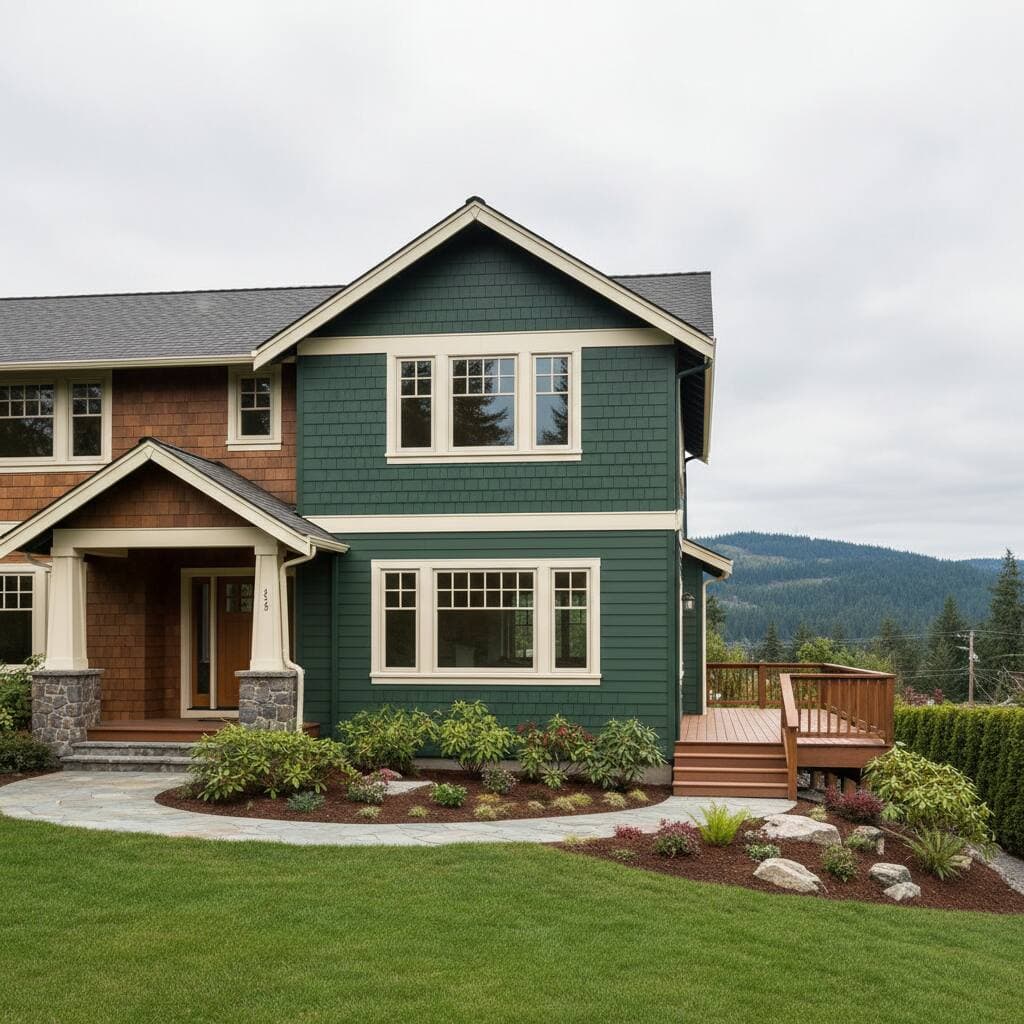
Adding a second story is one of the most transformative — and most expensive — remodeling projects a Vancouver, WA homeowner can take on. It doubles your livable space without expanding the footprint, keeps your yard intact, and avoids the hassle of buying a new lot. But costs in the Pacific Northwest run significantly higher than national averages, and the structural complexity is a different category from a kitchen remodel or bathroom renovation.
This guide covers realistic 2026 second story addition costs for Clark County, what drives the price, how permits and zoning work in Vancouver, and whether building up is a better financial move than relocating.
TL;DR
Second story additions in the Pacific Northwest cost $300–$400+ per square foot in 2026 (Amplified Renovations). A 1,000 sq ft full second story runs $250,000–$400,000+, including structural reinforcement, new roof, HVAC extension, and finishes. Plan for 9–14 months from design through move-in.
Considering adding a second story? Our team provides free, no-obligation estimates for home additions across Clark County.
Get Your Free EstimateWhat Does a Second Story Addition Cost Per Square Foot?
In the Pacific Northwest, second story additions cost $300–$400+ per square foot in 2026, per contractors specializing in vertical additions. That compares to a national average of roughly $175 per square foot reported by HomeAdvisor. The gap is driven by the same factors that inflate all Clark County construction costs: higher labor rates, seismic requirements, and moisture-management standards that don't apply in drier climates.
Why so much more than a ground-floor addition? Because a second story requires removing the existing roof, reinforcing the foundation and bearing walls below, building the new framing, and then installing a new roof on top of everything. You're essentially doing two projects — structural upgrades to the first floor, and construction of the second.
Washington state construction labor runs 25.5% above the national average, per the Bureau of Labor Statistics (2025). That premium shows up in every framing crew, every electrician, and every roofer on your project.
Total Cost by Project Type
Second story additions range widely depending on scope. A single bonus room over the garage is a fundamentally different project than a full second floor with bedrooms, bathrooms, and a laundry room. The table below shows what Vancouver-area homeowners can expect in 2026.
| Project type | Sq ft added | Cost range | What's included |
|---|---|---|---|
| Bonus room over garage | 200–400 | $60k–$120k | Single room, HVAC extension, basic finishes, dormer or gable roof modification |
| Partial second story | 400–800 | $120k–$250k | 1–2 bedrooms, bathroom, hallway, partial roof replacement, foundation reinforcement |
| Full second story | 800–1,200+ | $250k–$400k+ | 3–4 bedrooms, 2 bathrooms, laundry, full roof tear-off and rebuild, complete structural reinforcement, new staircase, full HVAC system |
These ranges include design, engineering, permits, construction, and standard finish-level materials. High-end finishes (custom tile, premium fixtures, built-ins) push costs toward the upper end. If you're planning to remodel the first floor at the same time, see our whole house remodel cost guide for combined budgeting.
Second Story Addition Cost by Project Type — Vancouver, WA (2026)
Includes design, engineering, permits, and mid-range finishes
What Drives Second Story Addition Costs?
Unlike a kitchen or bathroom remodel where cabinets and countertops dominate the budget, second story additions are driven by structural and mechanical systems. The finish materials matter, but they're secondary to the engineering that makes the addition possible.
Foundation reinforcement: $5,000–$50,000
This is the most variable line item. Homes built on modern engineered foundations may only need minor upgrades to bearing points. Older homes — especially pre-1980 construction on unreinforced concrete footings — can require underpinning, sister footings, or partial foundation replacement. A structural engineer determines the scope; the contractor executes it.
Roof tear-off and rebuild: $15,000–$40,000
The existing roof comes off entirely for a full second story. A new roof goes on top of the addition, often with a different pitch or design to accommodate the new floor. For partial additions, you're tying new framing into existing roof structure, which requires careful flashing and weather integration — especially critical in the PNW where rain drives 70%+ of building envelope failures.
Structural engineering: $350–$800 (assessment) + $3,000–$8,000 (full plans)
Every second story addition requires a licensed structural engineer. The initial assessment evaluates whether the existing structure can support the load. Full engineering plans detail the reinforcement needed, beam sizing, connection hardware, and seismic requirements. Washington's seismic zone classification adds cost compared to non-seismic areas.
HVAC extension: $8,000–$25,000
Your existing HVAC system almost certainly cannot handle the added square footage. Options range from extending existing ductwork with a larger furnace to installing a dedicated second-floor heat pump system. In Clark County, a ductless mini-split system for the second floor runs $8,000–$15,000 and avoids the complexity of running ductwork through first-floor ceilings. A fully ducted system costs more but integrates better with whole-home climate control. Check our energy-efficient remodeling guide for heat pump options and available rebates.
Staircase: $5,000–$20,000
A new staircase consumes 80–100 square feet of first-floor space. Where it goes matters both structurally (you may need to remove or modify a bearing wall) and functionally (traffic flow through the existing layout). Standard framed stairs with drywall and simple railing run $5,000–$10,000. Open-tread or custom designs with hardwood and metal railings push past $15,000. Many homeowners combine the staircase addition with an open floor plan remodel on the first floor to improve flow.
Electrical and plumbing: $10,000–$30,000
Adding bedrooms and bathrooms upstairs means new electrical circuits, lighting, outlets, and plumbing supply and drain lines. Older homes may need a panel upgrade to 200 amps ($3,000–$6,000) to handle the additional load. Plumbing is simplest when second-floor wet rooms stack directly above first-floor plumbing — plan the layout around this principle to save thousands.
Finishes: $30,000–$80,000+
Flooring, drywall, paint, trim, doors, lighting fixtures, bathroom tile, and closet systems make up the finish package. Mid-range finishes keep costs toward the lower end. Premium hardwood, custom tile, and built-in storage push higher. For bathroom finish costs specifically, see our bathroom remodel cost guide. If you're adding a kitchen on the new floor, our kitchen remodel cost guide covers component-level pricing.
Permits and fees: $3,000–$12,000
Clark County permit fees for a second story addition are calculated based on project valuation. For a $250,000+ project, expect $3,000–$12,000 in combined building, electrical, plumbing, and mechanical permits. System development charges (SDCs) may also apply if the addition adds bedrooms. For full details, see our permits and inspections guide.
Vancouver, WA Permits and Zoning for Second Story Additions
Second story additions in Vancouver require a full building permit, including structural, electrical, plumbing, and mechanical sub-permits. This is not a project you can start without approved plans.
Height limit: 35 feet (VMC 20.410.050)
Vancouver Municipal Code section 20.410.050 caps residential building height at 35 feet in most single-family zones. A typical two-story home with standard 9-foot ceilings falls between 24–30 feet, leaving adequate margin. If your lot has significant slope, the measurement method changes and can reduce effective allowable height. Confirm with the City of Vancouver planning department before design begins.
Setback requirements
Adding height does not change your footprint, so side and rear setbacks typically remain compliant. However, some zones have upper-story setback or step-back requirements to protect neighboring properties from shadowing. Review your specific zoning designation with the city or your architect.
Seismic and structural plan review
Clark County sits in a seismically active zone, and the building department will require stamped structural engineering plans showing the addition meets current seismic code. This review adds 2–4 weeks to the permit timeline compared to simpler remodel permits. All connections, hold-downs, and shear wall requirements must be detailed in the plans.
Permit timeline
Plan for 4–10 weeks of permit review for a second story addition — longer than a standard remodel permit because of the structural engineering review. Submit your application as early as possible. Clark County allows plan revisions during review, so you can refine details while the clock runs.
How Long Does a Second Story Addition Take?
From initial design consultation to move-in, plan for 9–14 months. The construction phase itself runs 6–9 months for a full second story. Partial additions and bonus rooms are shorter — typically 4–6 months of construction.
| Phase | Duration |
|---|---|
| Design and architectural plans | 4–8 weeks |
| Structural engineering | 2–4 weeks |
| Permit review (Clark County) | 4–10 weeks |
| Foundation reinforcement | 2–4 weeks |
| Roof removal and framing | 4–6 weeks |
| Roofing, siding, windows (exterior close-in) | 3–5 weeks |
| Electrical, plumbing, HVAC rough-in | 2–4 weeks |
| Insulation, drywall, and inspections | 2–3 weeks |
| Finishes (flooring, tile, paint, trim) | 4–6 weeks |
| Final inspections and punch list | 1–2 weeks |
The weather matters in Vancouver. Roof removal and framing are best scheduled for May through September when rain is least likely. Starting structural work in the dry season prevents moisture damage to the exposed first floor and keeps the project on schedule.
Full Second Story Addition Timeline — Vancouver, WA
Pre-construction phases may overlap. Total: 9–14 months.
Living Arrangements During Construction
Unlike a kitchen or bathroom remodel where you can camp out in another part of the house, a second story addition makes the home unlivable for most of the construction phase. Once the roof comes off, you're exposed to weather, dust, and active framing operations.
Budget for 4–7 months of alternative housing during construction. In the Vancouver, WA rental market, a short-term furnished rental runs $2,000–$3,500 per month. That's $8,000–$24,500 in temporary housing costs that should be part of your project budget from day one.
Some families stay with relatives, rent a nearby apartment, or use an RV on the property (check city regulations on temporary occupancy). Whatever your plan, lock it in before construction starts — scrambling for housing after demo begins adds stress and cost.
ROI and Resale Value
Second story additions return approximately 71.1% of their cost nationally, according to the Zonda Cost vs. Value 2024 report. That means a $300,000 addition adds roughly $213,000 in resale value. Not a dollar-for-dollar return, but competitive with most major remodeling projects.
The Clark County context makes this number more compelling. The median home price in Clark County reached $549,000 as of February 2026, per The Columbian. In neighborhoods where 2,400–3,000 sq ft four-bedroom homes sell for $650,000–$800,000, adding a second story to a 1,200 sq ft ranch can bridge the value gap significantly. You're not just adding square footage — you're changing the comp set your home is measured against.
For a broader look at which projects deliver the best return, see our home renovation ROI guide.
Build Up vs. Move: The Real Math
The “should we add on or just buy a bigger house?” question comes up in almost every initial consultation. The answer depends on local market conditions, your equity position, and how attached you are to your neighborhood. Here is how the math works in Clark County.
The cost of moving
- Real estate commissions: 5–6% of your current home's sale price. On a $549,000 home, that's $27,450–$32,940.
- Closing costs (buying): 2–3% of the new home's purchase price.
- Moving expenses: $3,000–$8,000 for a local move with packing.
- Mortgage rate reset: If your current rate is below 4%, moving to a larger home at 6.5–7% adds hundreds per month in interest.
- Renovation of the new home: Most “bigger” homes in the $650K–$800K range still need $30,000–$80,000 in updates to match your taste.
Total moving cost in a typical Clark County scenario: $65,000–$140,000+ in transaction and transition costs, plus a higher monthly mortgage payment for the life of the loan.
The cost of building up
A full second story at $250,000–$400,000 is a larger upfront number, but you keep your existing mortgage rate, stay in your neighborhood, keep your kids in the same school district, and end up with a home customized to your exact needs. Financed through a construction loan or HELOC, the monthly impact is often comparable to the higher mortgage you'd take on with a move.
Build Up vs. Move — Cost Comparison (Clark County, 2026)
Build Up
Move to Larger Home
Move costs don't include higher monthly mortgage at current rates
Based on Clark County median home price of $549,000 (Feb 2026)
The breakeven math favors building up when: (1) your current mortgage rate is below 5%, (2) comparable larger homes in your area cost $650,000+, and (3) you plan to stay at least 7–10 years. If you're planning to move within 3–5 years, the ROI may not justify the disruption.
Another option worth exploring is an accessory dwelling unit (ADU). If your primary need is rental income or multi-generational living rather than personal square footage, an ADU can be more cost-effective than a full second story.
Planning Steps for Your Second Story Addition
A second story addition is not a project you start casually. The pre-construction phase is just as important as the build itself. Follow this sequence to avoid expensive surprises.
- Hire a structural engineer first. Before you talk to an architect or contractor, get a structural assessment ($350–$800). This tells you what your foundation and framing can handle, and sets the boundary conditions for everything that follows.
- Check zoning and setbacks. Confirm the 35-foot height limit applies to your zone and verify there are no overlay restrictions. The City of Vancouver planning counter can answer these questions for free.
- Get design and architectural plans. Work with an architect or design-build firm that has experience with vertical additions. The staircase location, second-floor layout, and roof design all need to work together from day one.
- Collect 3+ contractor bids with matching scope. Make sure each bid includes the same structural work, same finish level, same HVAC approach, and the same permit responsibility. Apples-to-apples is the only way to compare.
- Secure financing before signing. Know your actual construction budget before committing. Construction loans, HELOCs, and home equity loans are the most common funding paths for additions of this size.
- Plan your temporary housing. Book your rental or make family arrangements well before construction starts. The Vancouver rental market tightens seasonally, and waiting until demo day is a recipe for overpaying.
- Submit permits early. The 4–10 week permit timeline is dead time if you wait until plans are finalized. Submit as soon as plans are substantially complete and refine during review.
Ready to Explore a Second Story Addition?
We'll evaluate your home's structural potential, walk through design options, and give you a clear cost range — no pressure, no obligation.
Schedule a Free ConsultationSecond Story Addition FAQ
How long does it take to build a second story addition in Vancouver, WA?
Plan for 9–14 months total: 2–4 months of design, engineering, and permits, followed by 6–9 months of construction. Bonus rooms and partial additions run shorter — typically 3–6 months of construction. The biggest schedule variables are permit review time and weather during the framing phase.
Can my foundation support a second story?
Most homes built after 1990 in Clark County have foundations that can support a second story with moderate reinforcement. Older homes, especially those on unreinforced concrete footings, may need underpinning or sister footings. A licensed structural engineer ($350–$800 for the assessment) is the only reliable way to answer this question for your specific home.
Do I need to move out during a second story addition?
Yes, for most of the construction phase. Once the existing roof is removed and new framing begins, the home is not safely habitable. Most families plan for 4–7 months of alternative housing. Budget $2,000–$3,500 per month for a short-term furnished rental in the Vancouver area.
What is the height limit for residential homes in Vancouver, WA?
Vancouver Municipal Code section 20.410.050 establishes a 35-foot maximum building height for most single-family residential zones. A standard two-story home with 9-foot ceilings typically measures 24–30 feet, comfortably under the limit. Lots with slope or in overlay zones may have different effective limits — confirm with the city before design.
Is a second story addition worth the investment in Clark County?
Second story additions return approximately 71.1% of their cost nationally (Zonda Cost vs. Value 2024). In Clark County, where the median home price is $549,000 and land inventory is constrained, adding square footage vertically is often the most cost-effective way to gain space without buying a new property. The investment makes the strongest financial sense when you plan to stay 7+ years and your current mortgage rate is below 5%.
Sources & References
- Amplified Renovations — PNW Second Story Addition Cost Data
- HomeAdvisor — National Second Story Addition Cost Average
- Zonda / Remodeling Magazine — 2024 Cost vs. Value Report
- Bureau of Labor Statistics — Occupational Employment and Wages, Washington State (2025)
- The Columbian — Clark County Median Home Price (February 2026)
- City of Vancouver — Vancouver Municipal Code 20.410.050 (Building Height Standards)
- Clark County Community Development — Building Permit Fee Schedule
Written by
GVX Remodeling Team
Practical cost and planning guidance from the GVX Remodeling team, helping Clark County homeowners evaluate second story additions with realistic budgets and clear expectations.